Hidden Bank Fees in the U.S. and How to Avoid Them
Learn the most common hidden bank fees in the U.S. and practical ways to avoid them in 2026.

Most people don’t choose a checking account because they love reading fee schedules. They choose it because it’s “free,” convenient, or tied to a branch near home. Then the small charges start showing up: a monthly service charge that appears after a quiet change in your balance, an unexpected out-of-network ATM cost, a “maintenance” fee you didn’t realize was conditional, or an overdraft situation that feels impossible to predict.
In 2026, the fee landscape is more complicated than it used to be. Many banks have reduced or eliminated some highly criticized charges, but fee revenue hasn’t disappeared—it has shifted. Instead of a single obvious penalty, costs often come in clusters: a bank’s fee plus a network fee, an exchange rate markup plus a “foreign transaction” add-on, or a charge that only applies if you miss a requirement by a few dollars. These charges aren’t always illegal or even “hidden” in the sense of being secret. They are usually disclosed. The problem is that disclosure is often written for compliance, not clarity.
This guide breaks down where bank fees tend to hide, why they happen, and how to protect yourself without turning personal finance into a full-time job. You’ll learn how to spot the most common triggers, build a simple system to avoid them, and compare accounts the right way so you don’t trade one set of costs for another. If you want to keep more of your own money—without constantly worrying about surprise charges—this is the roadmap.
What “Hidden” Really Means and Why Banks Keep Adding New Charges

When people talk about “hidden” bank fees, they usually mean one of three things: fees buried in long disclosures, fees triggered by conditions that don’t feel intuitive, or fees that appear as a side effect of something you thought was free. In other words, the fee isn’t always invisible. It’s just easy to miss until it hits your account.
Banks design pricing around behavior. They want certain customers: people who keep stable balances, use direct deposit, avoid high-cost service channels, and don’t require frequent human support. Fees are often a way to nudge behavior (for example, encouraging direct deposit) or to charge for customers who don’t match the bank’s “preferred” profile.
Another reason bank fees persist is cross-subsidization. Many institutions advertise low or no monthly costs but make up revenue through overdraft-related charges, out-of-network ATM usage, or add-ons like expedited payments, wire transfers, and paper statement delivery. Even when a bank removes one unpopular fee, another category can become more important.
To avoid bank fees consistently, you need to understand the difference between “fee for service” and “fee for falling out of compliance.” A wire transfer fee is a clear price for a service. A monthly maintenance fee is often a penalty for not meeting ongoing requirements. Most people get caught by the second type because it’s easy to drift out of the “free” zone.
Finally, many fee triggers are timing-based. A balance requirement might be measured daily, not monthly. A direct deposit requirement might reset after an account change. An overdraft might occur because of the order transactions post, not because you overspent in real time. If you treat your account like a simple ledger, you can still get surprised.
Monthly Maintenance Fees and Minimum Balance Traps
Monthly service charges are one of the most common bank fees that people assume they won’t pay. A checking account may be advertised as free, but only if you meet conditions such as maintaining a minimum daily balance, receiving qualifying direct deposits, keeping a minimum combined balance across multiple accounts, or using a certain number of debit transactions each month.
The tricky part is how “minimum balance” is calculated. Many banks use a minimum daily balance, not an average. That means a short dip below the threshold—maybe right before payday—can trigger a fee even if your balance looks healthy most of the month. Some accounts also use tiered requirements that change if you convert account types, move states, or shift between student and regular status.
Direct deposit requirements can also be misunderstood. Some banks only count payroll deposits, not transfers from your other bank. Some require a certain dollar amount per statement cycle. If your employer changes payroll providers or timing, you can unintentionally miss the requirement and get charged the following month.
A practical defense is to build “free account rules” that you can check in two minutes:
- What is the exact waiver requirement?
- Is it measured daily, monthly, or per statement cycle?
- Does it depend on deposit type or amount?
- What happens if you miss it one time?
If you keep a lower balance, prioritize accounts with no maintenance fees at all, not “waivable” ones. If you have stable income, choose a setup where direct deposit alone waives the fee, and confirm what counts as qualifying. In 2026, many online banks and credit unions provide no-fee checking, but you still have to verify other categories like ATM access and cash deposits.
The simplest approach is to treat maintenance fees like a red flag. If an account requires careful behavior to remain free, you’re essentially paying with mental bandwidth. Unless the account provides a real advantage—like premium customer service, strong ATM access, or a relationship benefit—it’s usually better to choose a structure with fewer rules.
Overdraft and NSF Charges: The High-Impact Fees That Still Surprise People
Overdraft-related bank fees remain one of the biggest sources of consumer frustration because the trigger doesn’t always match the customer’s experience. You may see a positive balance when you swipe your debit card, then later discover a negative balance after transactions settle, holds release, or a payment posts in a different order than you expected.
There are two major categories: overdraft fees (when the bank pays an item that exceeds your balance) and NSF/returned item fees (when the bank declines the item). In recent years, many institutions reduced these charges or changed policies, but they still exist widely, and some fee structures are simply more complicated than before.
A particularly confusing scenario involves “authorized positive, settled negative” transactions. A debit transaction can be authorized when your balance appears sufficient, but later settle when your balance is lower due to other posted payments. Some regulators have specifically warned institutions about practices that create unavoidable overdraft outcomes for consumers, especially when timing and payment processing are outside the customer’s control.
To reduce overdraft risk without living in fear of your balance, build one clear system:
- Keep a small buffer in checking (even $100–$300 can change outcomes).
- Turn on low-balance alerts and real-time transaction notifications.
- Link a savings account for overdraft transfers if the bank offers it on reasonable terms.
- Consider opting out of overdraft coverage for everyday debit card transactions if you prefer declines over fees.
Also pay attention to “extended overdraft” or “sustained negative balance” fees. Some banks charge an extra fee if your account stays negative for a set number of days. That can turn one mistake into a snowball.
In 2026, an important step is comparing overdraft policies the way you compare interest rates: with specifics. Ask what the bank charges per item, whether there’s a daily cap, whether small overdrafts are forgiven, and how the bank handles transaction posting and authorization. If a bank can’t explain its policy in plain language, that’s a signal to consider another option.
ATM Fees and Cash Access Costs That Add Up Quietly
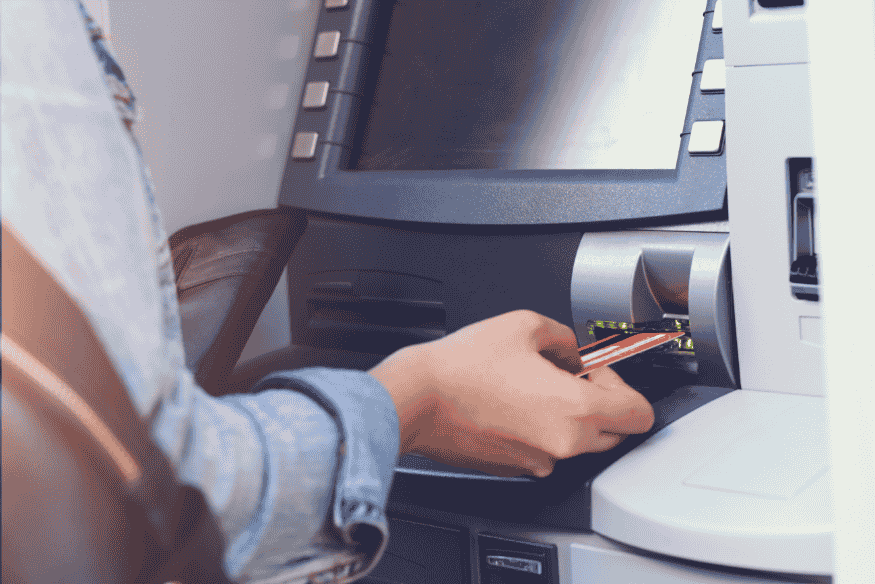
ATM usage can create layered charges that feel “small” until you add them up. You can pay your bank’s out-of-network ATM fee plus the ATM owner’s surcharge. Some banks reimburse a limited amount, but only if you meet account requirements. Others reimburse only within certain networks, or only up to a cap that resets monthly.
If you withdraw cash multiple times per week, the most cost-effective strategy is to reduce frequency. One larger withdrawal per week usually costs less than several small ones. But for many people, the better fix is choosing an account with a strong free ATM network or reliable reimbursements.
Cash deposits can also be a hidden cost in practice. Many online banks do not have easy cash deposit options, or they charge fees through third-party deposit services. Some brick-and-mortar banks allow free deposits but compensate with monthly service charges or other requirements. If you regularly handle cash (tips, side gigs, family businesses), you should treat cash deposit policy as a core feature, not an afterthought.
Another quiet category is “balance inquiry” or “ATM mini statement” fees at out-of-network machines. Even if you don’t withdraw money, you may be charged for requesting information. If you rely on ATMs to track balances, switch to app notifications and in-app balance checks instead.
A practical checklist for avoiding ATM-related bank fees:
- Use your bank’s in-network locator and save the map in your phone.
- Enable fee-free cash withdrawal limits in the app if available.
- If you travel often, choose an account that handles both domestic and international ATM access well.
- Prefer accounts that clearly state reimbursements and do not require complex monthly hoops.
ATM costs are one of the easiest areas to optimize because the fix is usually one decision: pick the right network and stop paying for access to your own cash.
How to Audit Your Account and Choose the Right Bank in 2026
Avoiding bank fees long-term requires a one-time setup and a lightweight monthly routine. You don’t need to memorize every possible charge. You need a system that catches issues early and steers you into accounts that match your real behavior.
Start with a quick audit:
- Download the last 90 days of transactions.
- Sort by “fees” and list every charge type.
- Identify the trigger for each charge (balance, timing, out-of-network usage, paper statement, overdraft).
- Add up the total monthly average.
This number matters. Many people spend more on bank fees than they realize because the charges are scattered. Once you know your average, you can compare accounts meaningfully. A bank that saves you $15 per month is effectively worth $180 per year, even before you consider the stress reduction.
Then evaluate account fit:
- If you keep low balances, prioritize no-monthly-fee accounts with forgiving policies.
- If you use cash often, prioritize easy cash deposits and a good branch/ATM footprint.
- If you travel or shop internationally, prioritize foreign transaction policy and ATM strategy.
- If your income is irregular, prioritize flexible waiver rules rather than strict direct deposit thresholds.
Set protections:
- Enable low-balance alerts at a level that gives you time to act.
- Turn on every push notification for withdrawals, purchases, and transfers.
- Keep a buffer in checking and consider a separate “bills” account.
- Review the fee schedule once per year, because banks can change pricing.
Finally, remember that the “best” bank is not universal. The best bank is the one that aligns with your habits so you don’t have to fight your own account rules. When the structure matches your life, most bank fees disappear without effort.
Conclusion

Hidden charges don’t usually feel dramatic. They feel like a few dollars here and there, the kind of money that’s annoying but easy to ignore. That’s exactly why they persist. Over time, recurring account charges, out-of-network ATM costs, avoidable overdraft situations, and administrative add-ons can quietly pull hundreds of dollars per year out of your budget—money that could be saved, invested, or used for essentials.
The most effective way to protect yourself is to stop treating fees as random bad luck and start treating them as predictable triggers. Monthly service charges are often tied to balance or deposit rules. Overdraft costs are often tied to timing and transaction processing, not just overspending. ATM charges are often the result of using the wrong network. Travel-related costs are often a combination of percentage fees and exchange rate choices. Administrative charges are often the price of default settings, like paper statements or unused accounts left open.
In 2026, you have more options than ever: online banks with no maintenance fees, credit unions with consumer-friendly policies, and tools that can alert you the moment your account moves in the wrong direction. The goal is not to become paranoid. The goal is to build a simple setup: the right account structure, the right alerts, and one short audit routine that keeps problems from snowballing.
If you take just one step after reading this, make it practical: review your last three months of bank fees and identify the top two triggers. Then either change your habits to avoid them—or switch to an account where those triggers don’t exist. That’s how you turn the idea of avoiding fees into real money back in your pocket.